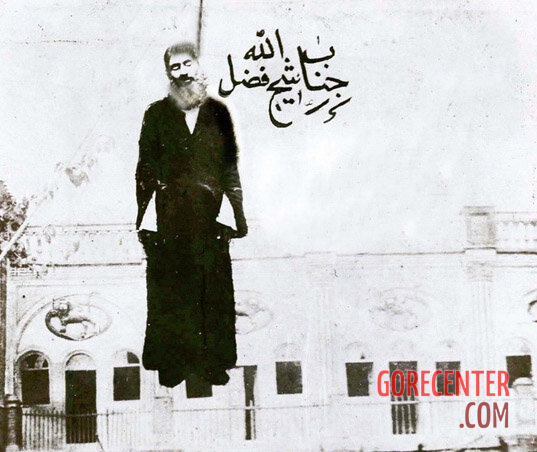
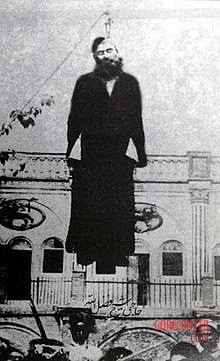
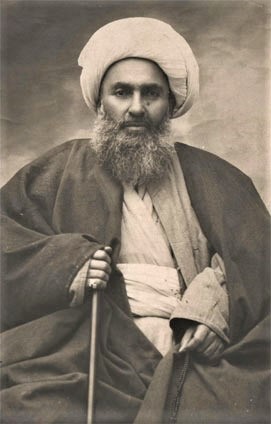
TEHERAN, IRAN – JULY 31, 1909 Sheikh Fazlollah Nouri was one of the most influential Shia clerics in Iran during the late 19th and early 20th centuries. Born in 1843 in Mazandaran Province, he studied Islamic law in the major Shia religious centers of Iraq before becoming a respected scholar and preacher in Tehran. Early in his career, Nouri supported efforts to curb the absolute power of the Persian shah and opposed growing foreign influence in the country. He also played an important role in the Tobacco Protest of the 1890s, which forced the government to cancel a British tobacco monopoly.
-
- Fazlollah Nouri 1
-
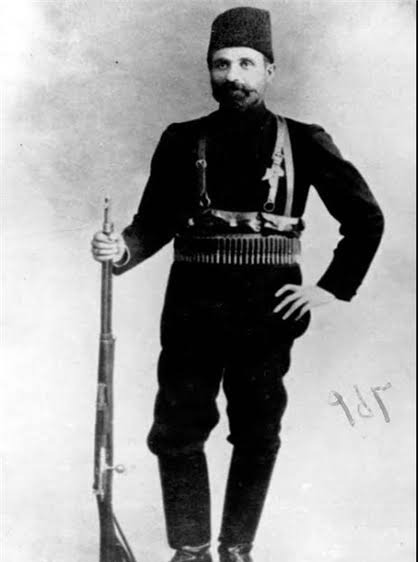
- Fazlollah Nouri 2
His views changed dramatically during the Persian Constitutional Revolution (1905–1911). While many religious leaders backed the creation of a parliament and a constitutional monarchy, Nouri became one of the movement’s strongest opponents. He argued that all state laws had to conform strictly to Islamic law (Sharia) and that elected lawmakers should never have authority above religious principles. In his view, Western-inspired ideas such as secular legislation, equality before the law, and unrestricted political freedoms were incompatible with Islam.
When Mohammad Ali Shah attempted to abolish the constitution and restore absolute rule, Nouri openly supported him. The shah dissolved parliament with the backing of Russian forces, and Nouri defended these actions while condemning the constitutional movement. After constitutionalist forces captured Tehran in 1909, however, the shah was deposed, and Nouri was arrested.
He was brought before a special revolutionary tribunal and charged with supporting the shah’s coup against the constitutional government, inciting opposition to parliament, and spreading corruption and disorder in the country. The court sentenced him to death by hanging. Although he reportedly had the opportunity to seek protection at the Russian Embassy, he refused, saying that Islam should not take refuge under a foreign flag.
On July 31, 1909, Sheikh Fazlollah Nouri was publicly hanged in Tehran’s Toopkhaneh Square before a large crowd. His execution became one of the defining moments of the Constitutional Revolution, symbolizing the victory of constitutionalism over supporters of absolute monarchy.
Nouri’s legacy remains deeply controversial. Supporters of the Constitutional Revolution remember him as a leading opponent of democracy who sided with an authoritarian ruler. In contrast, following the 1979 Islamic Revolution, Iran’s new religious leadership rehabilitated his image. Ayatollah Ruhollah Khomeini praised Nouri as a martyr who defended Islam against secular political ideas, and many of his religious and political views later influenced the ideology of the Islamic Republic.
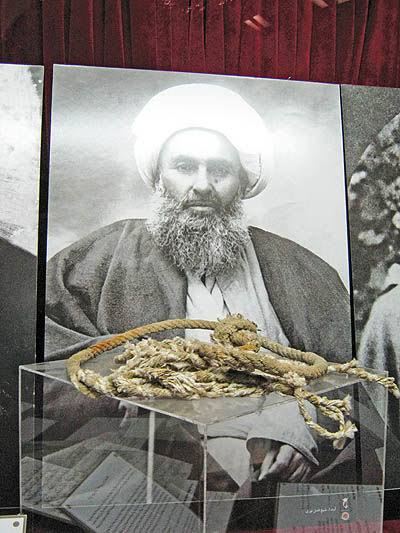
Museum exhibition
One of the most unusual relics connected to Sheikh Fazlollah Nouri can still be found in Iran. A fragment of the rope used in his execution is reportedly preserved and displayed in a museum dedicated to his life and legacy, where it is presented as a historical artifact commemorating his death and portraying him as a religious martyr.